


Search Results for: wp-content/uploads/2010/08/library/yoga-mantras-chants/details-yoga-meditations-book-and-cd-set/RicardoLuis@icloud.com
Mind Body Mastery
What is the Mind-Body Connection?
The mind-body connection recognizes the reality that the mind and body are intimately and ultimately linked as one. There is absolutely no separation. What is thought or felt always resonates throughout the body moment by moment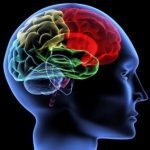 through a bio-chemical reaction. This reaction is either life and health enhancing or defeating. It has also been verified that each emotion has a distinct biochemical signature that affects mental and physical health.
Researchers report that meditation, controlled breathing, deep relaxation and directed, guided imagery can boost the immune system, alter blood pressure, decrease pain, and help with problems such as infertility and insomnia. These practices often help people cope with and recover from unpleasant medical procedures as well as the effects of stress from daily living. Furthermore, the refinement of consciousness that takes place leads to spiritual growth and maturity.
Positive aspects of this connection consist of and contribute to:
- The ability to accomplish dreams and goals
- Feelings of contentment
- Living in balance
- Physical, emotional, and mental well-being
- Awakening the spirit
- Finding peace and happiness
On the other hand, the mind-body connection can also:
- Undermine one’s health physically, mentally and emotionally
- Create negativity
- Block the flow of creative and healing energy
- Contribute to illness, injuries and disease
- Cause unhappiness and dissatisfaction
Transformational tools that activate and assist this process include:
- Focused breathing
- Guided imagery and creative visualization
- Meditation
- Mind-body fitness modalities like yoga and tai chi
- Affirmations
- Honest expression and congruence of thoughts, feelings and actions
Mind-Body-Spirit Tools
- Take a 2 Hour Power Nap in 10 Minutes
It’s easy and effective. Don’t wait! Take a power nap. It’s only a click away. - Crown Pull
Stimulates blood flow to your brain. Reduces mental congestion. Helps overcome insomnia. Strengthens memory. Opens the crown chakra to higher inspiration. - 3 Thumps
Stimulates your energy, boost your immune system, and release stress, relieve pain.
Take a 2-hour Power Nap in 10 minutes
Trouble sleeping? Insomnia is at epidemic proportions and has dreadful consequences. A few problems associated with inadequate sleep include feeling irritable, exhausted, lowered immunity, poor mental / emotional health, and heart disease.
Relaxing regularly and deeply is the perfect remedy to conquer stress. The World Health Organization predicts that stress-related disorders and psychological disorders will be the second leading cause of disabilities in the world by 2020.
Guided Relaxation is another tool for your stress relief toolbox. The secret to gaining relaxed energy is to clear away the mental ruckus and emotional debris to make room for clear thinking.
One of the easiest ways of doing this is through relaxing the muscular tension held in the body by tensing and releasing muscle groups throughout your body using a reliable technique known as progressive muscular relaxation. Doing so not only releases physical tension, it also teaches you the felt difference between tension and relaxation.
By knowing this, you can catch physical tension early on and before it causes painful headaches, back problems and digestive trouble. A calming effect for the body, mind, emotions and spirit is awakened as well.
→ Listen to Take 10 free of charge. It’s an excerpt from the Power Napper eBook by Julie Lusk that includes relaxing and refreshing exercises.
 Take a FREE 2-Hour Nap in 10 Minutes Now.
Click on the Picture.
PS. Benefit from the 2-Hour Nap in 10 minutes often by coming back to this website again and again.
PPS.

Power Napper - Instant PDF Download!
Enjoy relaxation like you've never felt before. Guaranteed!
Learn to take a 2-hour nap in 10-minutes! Audio file included!
Spark your energy and erase tiredness with proven techniques to clear your mind and refresh your spirit.[WPCR_INSERT]
PPPS. Explore more mind-body exercises in Julie Lusk’s books and CDs, featuring deep relaxation and yoga nidra, guided imagery, and meditation.
Crown Pull
Stimulates blood flow to your head. Reduces mental congestion. Helps overcome insomnia. Strengthens memory. Opens the crown chakra to higher inspiration.
o Start with your thumbs on your temples with fingertips resting at the middle of your forehead.
o Apply pressure and slowly pull your fingers apart, stretching the skin. Breathe deeply, in through your nose and out through your mouth. Repeat if it feels good.
o Place your fingertips at your hairline and repeat the stretch.
o Repeat this pattern starting at the top, center, and back of your head. Continue until you reach the base of your neck.
3 Thumps
Stimulates your energies, boosts immune system, and releases stress. Relieves pain.
- Place the fingers of either or both hands in the center of your sternum at the thymus gland. Tap for 15 – 20 seconds. Use your thumb and all your fingers. As you tap, breathe slowly and deeply in through your nose with your tongue at the roof of your mouth and out through your mouth.
- Tap or rub the neuro-lymphatic spleen points firmly for about 15 seconds. They are beneath the nipples of the breasts and down one rib.
- Tap or rub the spleen acupuncture points located on the sides of the body about 4 inches below the armpits. As you tap, breathe slowly and deeply in through your nose and out through your mouth.
- In the future, use either the neuro-lymphatic spleen points or the spleen acupuncture points if one set is more tender than the other.
Get more info on the Mind-Body Connection
Power Napper - Instant PDF Download!
Enjoy relaxation like you've never felt before. Guaranteed!
Learn to take a 2-hour nap in 10-minutes! Audio file included!
Spark your energy and erase tiredness with proven techniques to clear your mind and refresh your spirit.What is Golden Repair Kintsugi or Kintsukuroi
What is Golden Repair Kintsugi or Kintsukuroi 

These Japanese Words mean Golden Repair
Kintsugi (金継ぎ) or Kintsukuroi (金繕い)
“Kin” is translated as Golden
“tsugi” means Repair
Kintsugi or Kintsukuroi prizes imperfection. It is the art of restoring broken pottery with gold so the fractures are literally  illuminated, capturing a kind of physical expression of its spirit.
“As a philosophy, kintsukuroi, celebrates imperfections as an integral part of the story, not something to be disguised. The true life of an object (or a person) begins the moment it breaks and reveals.that it is vulnerable,” says Georgia Pelligrini.
This technique suggests many things. Maybe we should think twice before throwing away broken objects. Perhaps, we should try to repair things rather than assume it is no longer useful. It may sometimes become a more valuable object.
This is the essence of resilience. Each of us can look for a way to cope with traumatic events in a positive way, learn from negative  experiences to take the best from them and convince ourselves that every experience makes each person unique and even more precious.
Pictured are a few golden repairs that I have done. Doing kintsugi gave me welcome relief when a few things that held sentimental value to me were better than before.
Inspired by Georgia Pelligrini, Steffano Carnazzi, Leggi L’Articolo, and Beth Owens
Here’s a little more background on Kintsugi with
instructions on how to make your own ceramic golden repairs 
Many thanks to Imaginative Crafts, Do-It-Yourself Projects and Video Tutorials by Robert Mahar, robert-mahar.com
Materials:
Broken pottery
Clear two-part epoxy
Mica Powder
Directions:
1. Following the manufacturer’s instructions, dispense a small amount of the clear two-part epoxy into a disposable tray.
2. Scoop a small amount of the mica powder onto the epoxy and stir thoroughly to combine.
3. Using a toothpick or sandwich pick, generously spread the epoxy along one edge of the broken pottery seam.
4. Align the two pieces of pottery and press together. Hold in place until the epoxy sets. Allow epoxy to fully cure before using.
Eye Exercises to Improve Vision
Computer and device screens seem to torture your eyes causing them to become tired and dry in no time at all. Poor lighting, glare, dry air, and constantly staring at the monitor all contribute to eye strain. 

Chances are good that it’s hard to recognize how exhausted your eyes are until they feel tired and dry or your head aches. Here are a few preliminary steps you can take to avoid such strains:
- If possible, adjust the screen colors so they aren’t too hard on your eyes; try soft colors for a nice change.
- Avoid glare by choosing a place for your computer that doesn’t reflect windows or lights. Remember to wipe your screen off regularly.
- Remember to look away from your screen every fifteen minutes or so. It’s too hard on your eyes to do such close work without a break. Do it now!
Eye Movements
After a while, eye muscles tire out and it becomes harder to focus. To prevent this from happening, you can practice these eye movements. They will strengthen your eye muscles and eyesight and stimulate the brain. Visual, auditory, and sensory perception can increase. Do them sitting up, standing, or lying down.
Here’s How
- Start doing the eye movements slowly and pick up the pace after you can do it smoothly without jerks.
- Switch off by first paying more attention to the eye movements than to the visual effects. Next, take a moment to focus on both ends of they eye stretch.
- Remember to keep your head still as you do the eye movements. Let your facial muscles relax as well.
First Variation: Up and Down
- With your head and neck evenly aligned and movement-free, look up as far as you can and try to see up and over your head. Then look down as if you would like to see under your chin. Keep doing this for about 15-20 times in a row.
- Follow this by bringing your eyes back to center and blink them a couple of times.
- Afterward, rest with your eyes closed and take several deep breaths.
- Smile
Second Variation: Side to Side
- This time look quickly to the right and try to see behind your ear, then rapidly look to the left and try to see behind your left ear. Keep looking back and forth for 15-20 times.
- When finished, bring your eyes back to center.
- Blink a few times and rest them with your eyes closed.
- Smile
Third Variation: Eye Circles
- Keep your head still and look up. Circle your eyes in a clockwise direction three times.
- When finished, bring your eyes back to center and rest with closed eyes for a few breaths.
- Circle your eyes in a counterclockwise direction three times.
- Blink a few times and rest them with your eyes closed.
- Smile
Palming will rest and relax your eyes, calm your nerves, and quiet your mind. Your respiration will increase as long as you remember to breathe deeply and fully.
- Rub your hands rapidly together with your palms and fingers touching. Keep rubbing until you feel the generation of some heat and energy.
- Next, rest your elbows on your desk.
- Cup your hands and gently place them over your closed eyes (no glasses). Let the warmth and darkness soothe your eyes.
- Take several long and easy breaths as you imagine the tiredness being released with your out-breath, and energy and vitality returning with your in-breath.
- Smile
Chidakasha: Quieting the Mind by Stilling the Eyes Using the sense of sight is a very effective centering technique. Doing so can have a beneficial effect on the brain as well. Have you ever noticed that you can still see even with your eyes closed? All that is needed is to try. You might see it as darkness, designs, colors, spots, or a combination. It does not matter. What matters is passively focusing your attention on what is being seen and watching it as it changes. Have fun watching whatever appears as it comes and goes on the inside screen of your closed eyelids. This brings you into the moment and quickly settles down mental restlessness. Yogis refer to watching this inner space of consciousness as Chidakasha. ( Yoga Nidra for Complete Relaxation & Stress Relief, page 115)
Note: If somebody catches you doing this, be prepared to say something clever like, “Can’t a person even pray around here?” Your other option is to tell them what you’re doing and have them join in.
- Notice the benefits and smile.
This one of the many exercises you can do while at your keyboard, in your car, or whenever you want to feel better.
 Julie Lusk, MEd, E-RYT 500, has more than 35 years of expertise in stress relief, yoga, relaxation training, guided imagery, and meditation as an international author, recording artist, and workshop leader. Julie is the author of Yoga Nidra for Complete Relaxation and Stress Relief, Yoga Meditations, two volumes of 30 Scripts for Relaxation, Imagery and Inner Healing, and Desktop Yoga®. Her audio downloads and CDs include Wholesome Relaxation, Power of Presence, Yoga Nidra Essentials, Blue Moon Rising, and many others. Learn more at WholesomeResources.com
Ethical Matters for Yoga Nidra Professional Training Course
Ethical Matters for Yoga Nidra Professional Training Course taught by Julie Lusk
- On successful completion, identify yourself as a Yoga Nidra Certified Teacher, Level 1 (or 2) not as a therapist unless licensed to do so. Level 1 certification qualifies you to provide yoga nidra for overall health and stress relief in group/private settings. Level 2 certified teachers can provide yoga nidra in synch with the objectives of the training.
- Yoga nidra is not a replacement or treatment for proper medical care. It can be used to reduce symptoms, side effects, and help with one’s ability to cope with stress and other issues. Do not guarantee results. Do not diagnose or describe yoga nidra as therapeutic. Only those specifically trained and licensed to provide therapeutics can do so. Board approval may be required in accordance with one’s profession. Make appropriate referrals to professionals as needed.
- Stay within your scope of practice. Do not work in areas you are not equipped, trained, or licensed to handle. For example, for physical, mental, or emotional conditions, specific suggestions for immune system, past life, inner child, trauma (PTS), etc. You are not permitted to train others to provide yoga nidra.
- Do not copy, sell, or distribute the scripts (with or without payment) without the publisher’s written permission. This includes electronically (audio/download/video, etc.) or in written form on paper or otherwise. If individuals wish to utilize scripts, refer them to relevant books, etc. Many scripts are professionally available on audio.
- You may copy and distribute handouts from the training with proper credit given.
- Scripts can be used in classes and with clients. You may record the scripts for your personal, noncommercial use. Always credit your sources fully and accurately with appropriate names and references.
- Maintain confidentiality. Provide accessibility, inclusion, and fairness. Be accountable and accurate. Practice quality business practices. Observe all applicable state or other local jurisdiction laws related to providing services.
- Always put the healing and growth of others first. Provide a safe environment. Do not, overtly or covertly, force people to participate in anything that may be uncomfortable for them. Emphasize that participants are in full control. Advise they can change or stop the Yoga Nidra process, open their eyes, and stretch anytime to return to their alert rational conscious mind at any time. Give permission to change anything that seems threatening to something that feels right or make use of an inner resource or personal sanctuary. In another vein, clients may want to explore what feels uncomfortable to them in the safety of the experience.
- Be certain that participants are fully awake and alert after a Yoga Nidra session and before going about their activities. Have them do some stretches and engage their senses afterwards, otherwise, it could lead to danger. For example, there are stories of people having trouble driving afterwards. One person went right through a stop sign after class. Others have gotten lost on their way home. Another was pulled over for driving too slowly.
- Advise participants that it is not safe to practice meditation or visualization while driving or operating machinery.
- Maintain professional boundaries. Avoid any relationships that could exploit the trust of clients/students. Obtain prior consent to use ethical touch, as appropriate. Avoid dual relationships and favoritism. Avoid romantic, intimate, or sexual relationships with teachers, students, clients, and trainees.
- Remember and utilize the Yamas and Niyamas, the social and personal tenets of Yoga. The Yamas are Ahimsa – reverence for all life; Satya – truthfulness; Asteya – integrity; Brahmacarya – moderation; and Aparigraha – nonattachment, lack of self-indulgence. The Niyamas are Shauca – purity and cleanliness; Santosha – contentment; Tapas – -discipline; Svadhyaya – Self-understanding; and Ishvara-Pranidhana – devotion to the divine. “Your will, not mine.” Refer to Patanjali’s Yoga Sutras for clarification.
I understand and agree to provide yoga nidra honestly, ethically and with integrity. ____Yes _____ No
Name
Date
JulieLusk.com
Updated: Feb 27, 2022
- « Previous Page
- 1
- …
- 25
- 26
- 27
- 28
- 29
- …
- 31
- Next Page »
