


Amazon Affiliate Disclosure Notice: It is important to also note that Wholesome Resources is a participant in the Amazon Services LLC Associates Program, an affiliate advertising program designed to provide a means for website owners to earn advertising fees by advertising and linking WholesomeResources.com to Amazon properties including, but not limited to, amazon.com, endless.com, smallparts.com, myhabit.com, smallparts.com, amazonwireless.com and/or any other website that may be affiliated with Amazon Service LLC Associates Program.
Search Results for: wp-content/uploads/2010/08/library/chakra-chart-2/details-wholesome-energizers-cd/details-real-relaxation-cd/• https:/wholesomeresources.com/chakra-energy-flow-meditation
30 Scripts for Relaxation, Imagery & Inner Healing are Revised!
My first two books have just been revised and are available in print and as an eBook!!!
Guided ima gery and relaxation are important life skills to know about and practice regularly. They are powerful mind-body-spirit techniques that are so much more than nice things to do if there’s time. Both volumes of 30 Scripts for Relaxation, Imagery and Inner Healing will easily and quickly help you:
- Relax deeply and replenish your energy
- Awaken and activate your natural abilities for self-healing
- Help with changing behaviors and habits for the better
- Uncover your inner truth and life direction while stimulating intuition
- Everyone can do it.
Hurrah for 30 Scripts for Relaxation, Imagery & Inner Healing
From an Amazon Customer …
“I am extremely pleased and am now the proud owner of both volumes of this book. It is one of those books that I use all the time, which says a lot. It helps me personally and is a terrific resource when I teach stress management sessions.”
Books in Print
 Enjoy and benefit from over 30 scripts for learning and leading guided relaxation and imagery techniques. Volume 2. CLICK on the blue title link above to find out more...
[WPCR_INSERT]
 Are you looking for a handy relaxation, imagery and meditation book for stress relief?
Here's the perfect book!
Help yourself and lead others with these scripts for relaxation, imagery, visualization & more.
Easy-to -follow scripts are here to
* Achieve deep, positive relaxation
* Benefit from stress relief
* Healing guided imagery
* Awaken intuition
* Increase self growth and understanding.
CLICK the blue title link above to find out more...
Are you looking for a handy relaxation, imagery and meditation book for stress relief?
Here's the perfect book!
Help yourself and lead others with these scripts for relaxation, imagery, visualization & more.
Easy-to -follow scripts are here to
* Achieve deep, positive relaxation
* Benefit from stress relief
* Healing guided imagery
* Awaken intuition
* Increase self growth and understanding.
CLICK the blue title link above to find out more...
[WPCR_INSERT]
eBooks for Instant Download
Are you looking for a handy relaxation, imagery and meditation book for stress relief?
Here's the perfect eBook!
Help yourself and lead others with these scripts for relaxation, imagery, visualization & more.
Easy-to -follow scripts are here to
* Achieve deep, positive relaxation
* Benefit from stress relief
* Healing guided imagery
* Awaken intuition
* Increase self growth and understanding.
CLICK the green title link to find out more...
[WPCR_INSERT]
Enjoy and benefit from over 30 scripts for learning and leading guided relaxation and imagery techniques. Volume 2. CLICK the green title link to find out more...
[WPCR_INSERT]
Click here for my newest article on Guided Relaxation & Imagery
Eye Exercises to Improve Vision
Computer and device screens seem to torture your eyes causing them to become tired and dry in no time at all. Poor lighting, glare, dry air, and constantly staring at the monitor all contribute to eye strain. 

Chances are good that it’s hard to recognize how exhausted your eyes are until they feel tired and dry or your head aches. Here are a few preliminary steps you can take to avoid such strains:
- If possible, adjust the screen colors so they aren’t too hard on your eyes; try soft colors for a nice change.
- Avoid glare by choosing a place for your computer that doesn’t reflect windows or lights. Remember to wipe your screen off regularly.
- Remember to look away from your screen every fifteen minutes or so. It’s too hard on your eyes to do such close work without a break. Do it now!
Eye Movements
After a while, eye muscles tire out and it becomes harder to focus. To prevent this from happening, you can practice these eye movements. They will strengthen your eye muscles and eyesight and stimulate the brain. Visual, auditory, and sensory perception can increase. Do them sitting up, standing, or lying down.
Here’s How
- Start doing the eye movements slowly and pick up the pace after you can do it smoothly without jerks.
- Switch off by first paying more attention to the eye movements than to the visual effects. Next, take a moment to focus on both ends of they eye stretch.
- Remember to keep your head still as you do the eye movements. Let your facial muscles relax as well.
First Variation: Up and Down
- With your head and neck evenly aligned and movement-free, look up as far as you can and try to see up and over your head. Then look down as if you would like to see under your chin. Keep doing this for about 15-20 times in a row.
- Follow this by bringing your eyes back to center and blink them a couple of times.
- Afterward, rest with your eyes closed and take several deep breaths.
- Smile
Second Variation: Side to Side
- This time look quickly to the right and try to see behind your ear, then rapidly look to the left and try to see behind your left ear. Keep looking back and forth for 15-20 times.
- When finished, bring your eyes back to center.
- Blink a few times and rest them with your eyes closed.
- Smile
Third Variation: Eye Circles
- Keep your head still and look up. Circle your eyes in a clockwise direction three times.
- When finished, bring your eyes back to center and rest with closed eyes for a few breaths.
- Circle your eyes in a counterclockwise direction three times.
- Blink a few times and rest them with your eyes closed.
- Smile
Palming will rest and relax your eyes, calm your nerves, and quiet your mind. Your respiration will increase as long as you remember to breathe deeply and fully.
- Rub your hands rapidly together with your palms and fingers touching. Keep rubbing until you feel the generation of some heat and energy.
- Next, rest your elbows on your desk.
- Cup your hands and gently place them over your closed eyes (no glasses). Let the warmth and darkness soothe your eyes.
- Take several long and easy breaths as you imagine the tiredness being released with your out-breath, and energy and vitality returning with your in-breath.
- Smile
Chidakasha: Quieting the Mind by Stilling the Eyes Using the sense of sight is a very effective centering technique. Doing so can have a beneficial effect on the brain as well. Have you ever noticed that you can still see even with your eyes closed? All that is needed is to try. You might see it as darkness, designs, colors, spots, or a combination. It does not matter. What matters is passively focusing your attention on what is being seen and watching it as it changes. Have fun watching whatever appears as it comes and goes on the inside screen of your closed eyelids. This brings you into the moment and quickly settles down mental restlessness. Yogis refer to watching this inner space of consciousness as Chidakasha. ( Yoga Nidra for Complete Relaxation & Stress Relief, page 115)
Note: If somebody catches you doing this, be prepared to say something clever like, “Can’t a person even pray around here?” Your other option is to tell them what you’re doing and have them join in.
- Notice the benefits and smile.
This one of the many exercises you can do while at your keyboard, in your car, or whenever you want to feel better.
 Julie Lusk, MEd, E-RYT 500, has more than 35 years of expertise in stress relief, yoga, relaxation training, guided imagery, and meditation as an international author, recording artist, and workshop leader. Julie is the author of Yoga Nidra for Complete Relaxation and Stress Relief, Yoga Meditations, two volumes of 30 Scripts for Relaxation, Imagery and Inner Healing, and Desktop Yoga®. Her audio downloads and CDs include Wholesome Relaxation, Power of Presence, Yoga Nidra Essentials, Blue Moon Rising, and many others. Learn more at WholesomeResources.com
Books in Print & eBooks
Yoga Nidra for Complete Relaxation and Stress Relief is here! If you feel stressed out, you aren’t alone. This down-to-earth book is packed with meditations, relaxation skills, and visualization techniques to help you relax, reflect, and revitalize for unshakable peace and joy. You will gain amazing results! See details here.
BOOKS in PRINT
-
Go to the CART to review your order & check out.

Experience peace and deeply restorative rest that heals your body, mind & spirit. Features 24 Yoga Nidra scripts written by author Julie Lusk and 12 of the world's master teachers. Enjoy 6 levels of relaxation for a joyful meditative experience. Learn to use yogic sleep to revitalize your inner reservoir of intuitive understanding and unconditional joy. Audiobook available.
CLICK the blue title link above to find out more...
Price: $19.99
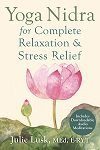
Yoga Nidra can stop tension in its tracks with a wonderfully, powerful & unique state of deep relaxation, mental clarity & insightful awareness.
These practical, empowering relaxation exercises, meditations that soothe and visualizations that renew are based on classic yoga and backed by modern science. They’ll help you unwind, replenish, and feel refreshed with durable peace and unconditional joy.
CLICK the blue title link above to find out more...
Price: $17.95

Awaken joy, peace and inspiration with this yoga meditations book.
Yoga Meditations contains a wide variety of mind-body practices, such as:
* Guided relaxation exercises
* Breathing practices
* Yoga Nidra
* Meditations and guided imagery
* Affirmations
* Yoga postures and meditations for each chakra
* Yoga wisdom for contemplation
Get a FREE Wholesome Energizers CD in every book!
CLICK the blue title link above to find out more...
Price: $29.95
Are you looking for a handy relaxation, imagery and meditation book for stress relief?
Here's the perfect book!
Help yourself and lead others with these scripts for relaxation, imagery, visualization & more.
Easy-to -follow scripts are here to
* Achieve deep, positive relaxation
* Benefit from stress relief
* Healing guided imagery
* Awaken intuition
* Increase self growth and understanding.
CLICK the blue title link above to find out more...
Price: $29.95
Enjoy and benefit from over 30 scripts for learning and leading guided relaxation and imagery techniques. Volume 2. CLICK on the blue title link above to find out more...
Price: $29.95
eBOOKS
-
Go to the CART to review your order & check out.
 Click here for the eBook edition via
New Harbinger Publications

Mind-Body Mastery - Instant PDF Download!
Improve your mind, body, and spirit with this amazing manual of guided relaxation, imagery and meditation practices.
This instant download gives you easy-to-follow tools that work .
Price: $5.00
Enjoy and benefit from over 30 scripts for learning and leading guided relaxation and imagery techniques. Volume 2. CLICK the green title link to find out more...
Price: $21.95
Are you looking for a handy relaxation, imagery and meditation book for stress relief?
Here's the perfect eBook!
Help yourself and lead others with these scripts for relaxation, imagery, visualization & more.
Easy-to -follow scripts are here to
* Achieve deep, positive relaxation
* Benefit from stress relief
* Healing guided imagery
* Awaken intuition
* Increase self growth and understanding.
CLICK the green title link to find out more...
Price: $21.95
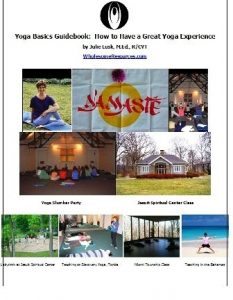
Yoga Guidebook - Instant PDF Download!
Yoga is the perfect way to
* Tone your body and improve health
* Clear your mind and calm emotions
* Change negative stress into positive energy and
* Make new friends.
This handy download gives you all the essential resources and guidelines you need for a great start.Price: $5.00

Power Napper - Instant PDF Download!
Enjoy relaxation like you've never felt before. Guaranteed!
Learn to take a 2-hour nap in 10-minutes! Audio file included!
Spark your energy and erase tiredness with proven techniques to clear your mind and refresh your spirit.Price: $5.00
108 Easy Energy Answers - Instant PDF Download!
If you get tired or frustrated, here's the answer you've been waiting for. Benefit now from 108 proven secrets to supercharge your outlook and health, bring meaning back into your relationships and achieve a satisfying, balanced lifestyle. Once and for all, you'll feel motivated and enjoy results any time and any place.
Price: $5.00
Stress Solutions Now - Instant PDF Download!
Improve your mind, body, and spirit with this amazing manual.
This instant download gives you stress relieving solutions that work every time.
First, you get quick, easy ways to identify sources and symptoms of stress.
Next, you'll learn simple techniques for getting genuine stress relief.
Finally, you'll benefit from 6 wellness strategies for living a worthwhile life, 8 practical solutions to handle stress with ease, and find out how to make remarkable improvements at work and home.
Price: $5.00
-
Go to the CART to review your order & check out.
Yoga Nidra FAQ on Setting Intentions & Sankalpas
This article is a yoga nidra FAQ on setting intentions & sankalpas for making durable positive changes effectively.
Yoga nidra is rapidly gaining in popularity these days, mostly because it’s so blissfully exhilarating. Yoga nidra (pronounced nih-drah)  means “yogic sleep” and is an ancient yoga practice with benefits supported by modern-day science. It’s a powerful experience of progressively relaxing and restoring physically, energetically, mentally, and emotionally that naturally opens us to accessing our intuition, unconditional joy, and deep restorative peace. It’s very refreshing too. In fact, one hour of practice is equivalent to four hours of sleep. See more documented benefits of yoga nidra here.
The yoga nidra process also makes it completely possible to clear out useless habits and bring about positive and durable changes to your lifestyle and positive personality changes by using a sankalpa at the start and the end of the practice. A sankalpa is a special intention, a self-selected resolve that you choose yourself. It’s a sacred vow and promise you make in support of your highest truth. Sample sankalpas are “I am courageous,” or “I have confidence,” or “My life is worthwhile.” It’s a quality that helps you become or do something worthwhile with your life. Likewise, it can be a reflection of your True Self such as “I am conduit of love,” or “My true nature is peace.”
How yoga nidra helps you make behavior changes and enables you to develop positive personal qualities.
“Our day-to-day frame of consciousness (beta brain waves) makes it extremely difficult to make and maintain our good intentions because they crash into our long term conditioning, habits, and social pressures,” as reported in Yoga Nidra for Complete Relaxation and Stress Relief (New Harbinger Publications, 2015). “Through no fault of your own, your mind is simply not very receptive to making these changes. During yoga nidra, we knowingly, consciously, and consecutively experience different types of brainwave levels that are receptive to change that include alpha, theta and delta frequencies and are associated with levels of consciousness. The level reached during yoga nidra depends on the depth of your experience. When we implant a resolve in the subconscious mind, useless thoughts and behaviors can be weeded out and the conditions are created for significant and transformative change to take root and grow.” Success is fortified by staying with the same sankalpa from practice to practice until it becomes a reality and takes root. Consistency counts.
Setting Intentions & Sankalpas
Time is set aside at the beginning of yoga nidra for a sankalpa to reveal itself naturally instead of  intellectually. Making intellectual sankalpas rarely yield results. In other words, one that you “should” make or one to please others. Instead, have one that resonates and rings true with you. Go for a balance between letting it come to you intuitively and thinking it through. Furthermore, you could have one specific to help with weight loss, getting more exercise or stopping an unhealthy habit, but it’s advised that you pick a grander quality instead. In doing so, the behavior change is likely to happen anyway and you will also reap many more benefits. For example, if you choose kindness as your sankalpa, true self-kindness will lead to eating better and exercising more by being kinder to yourself in support of your health. In addition, kindness will naturally bring on generosity, patience, and other positive qualities.
Word your sankalpa positively, in the present tense, clearly, and concisely. Keep it consistent. Back it up sincerely with gratitude and inner will. If using “I am” seems too challenging or too mindboggling, try adding “more and more” to it. For example, “I am content, more and more.”
Sample Sankalpas:
- I am kind.
- I am trusting.
- I am accepting of my feelings. Or, I accept unhappiness as part of my human experience.
- I have abundance.
- I am grateful for a peaceful nature.
- I embrace all of who I am.
- I enjoy life fully.
- I welcome health and wellness.
- My true nature is joyful.
Using a Sankalpa during Yoga Nidra.
A sankalpa is first silently said at the beginning of your yoga nidra experience and with your whole heart. It helps if you use your senses to imagine what it would be like if it were already true. Once again, repeat your sankalpa several times near the end of yoga nidra. Namely, when you are totally at ease and in the fertile delta brainwave state, and before coming back to full awareness. This is when your brain is most receptive.
Outcomes
I had my doubts about the effectiveness of using a sankalpa, especially when writing Yoga Nidra for Complete Relaxation and Stress Relief, so I put it to the test with a variety of students. Much to our delight and satisfaction, results started rolling in. Find out for yourself by reading their stories in the book. Better yet, try it yourself. Please let us know about your experience.
How to Experience Yoga Nidra:
Like all worthwhile things, regular practice yields the best results. It’s as easy as 1-2-3.
- Listen to Yoga Nidra Meditations: 24 Scripts for True Relaxation | Audible – iTunes – Amazon
- Read about it and get free audio downloads in Yoga Nidra for Complete Relaxation and Stress Relief (New Harbinger, 2015).
- Experience yoga nidra on video/audio.
- Attend a virtual yoga nidra class held weekly on Zoom.
- Take a yoga nidra teacher training course and earn a certificate.
- Get yoga nidra downloads here.
Resources: Books, Recordings & More
Get yoga nidra downloads here.
Experience peace and deeply restorative rest that heals your body, mind & spirit. Features 24 Yoga Nidra scripts written by author Julie Lusk and 12 of the world's master teachers. Enjoy 6 levels of relaxation for a joyful meditative experience. Learn to use yogic sleep to revitalize your inner reservoir of intuitive understanding and unconditional joy. Audiobook available.
CLICK the blue title link above to find out more...
Yoga Nidra can stop tension in its tracks with a wonderfully, powerful & unique state of deep relaxation, mental clarity & insightful awareness.
These practical, empowering relaxation exercises, meditations that soothe and visualizations that renew are based on classic yoga and backed by modern science. They’ll help you unwind, replenish, and feel refreshed with durable peace and unconditional joy.
CLICK the blue title link above to find out more...
Yoga Nidra Essentials CD Find your calm spot. Brighten your energy. Enjoy a more meaningful life. Experience 6 levels of relaxation. Reclaim optimal health for your body, mind & heart. Laura says "My focused mind easily. I was 100% worry-free. It's wonderful." By Julie Lusk, 6-time author. Digital downloads available.
Author: Julie Lusk, M.Ed., E-RYT 500
- « Previous Page
- 1
- …
- 11
- 12
- 13
- 14
- 15
- …
- 34
- Next Page »
