


Freedom is often imagined as something outside of us: more time, fewer obligations, a different circumstance, a clearer path. Yet Patanjali’s Yoga Sutras point toward a subtler and more enduring freedom—the freedom of awareness no longer mistaking itself for every passing thought, sensation, mood, or story.
Be sure to rest in your true nature and experience inward freedom with the short and long practices offered below.
What Yoga Nidra Teaches About Freedom
Yoga nidra, the practice of yogic sleep, is not simply a relaxation technique. It is a guided journey into conscious rest—a state in which the body softens deeply while awareness remains awake. In this threshold state, we can observe how experience continually changes: the body shifts, the breath moves, thoughts appear, emotions pass, and yet something steady remains.
This steady presence is central to the Yoga Sutras. Patanjali describes yoga as the quieting of the movements of the mind. When those movements settle, the seer rests in its own true nature. In everyday life, this may not feel dramatic. It may feel like one honest breath, one moment of less resistance, one pause before reacting, one glimpse of spaciousness inside a busy day.

Freedom Is Not Escape
In yoga nidra, freedom does not come from pushing life away. Instead, it arises from changing our relationship to what is present. Sounds may continue. Sensations may arise. Thoughts may move across the mind. The practice is not to control all of this, but to recognize that awareness can hold it all without becoming trapped by it.
This is the spirit of pratyahara, the drawing inward of the senses. Rather than withdrawing from life, we gather attention back from distraction. We remember that stillness is available beneath the surface. The outer world continues, but our center becomes less easily pulled away. Responsibility and freedom go hand-in-hand.
Practice and Non-Attachment
The Yoga Sutras emphasize abhyasa and vairagya: steady practice and non-attachment. These two qualities are beautifully reflected in yoga nidra. We return, again and again, to the body, breath, with witnessing awareness. At the same time, we release the need to perform the practice perfectly.
If the mind wanders, we return. If the body feels restless, we notice. If emotion arises, we make space. Each return is practice. Each release is non-attachment. Over time, this rhythm softens the grip of old patterns and reveals a quieter kind of freedom.
A Simple Sankalpa for Inner Freedom
A sankalpa is a heartfelt resolve, planted when the mind is receptive and quiet. For a freedom-centered yoga nidra practice, a simple sankalpa might be:
I rest in my true nature. I am inwardly free.
These words are not meant to force an outcome. They are an invitation to remember what the Yoga Sutras suggest is already true beneath the noise of the mind: awareness is spacious, steady, and whole.
The Open Sky of Awareness
The open sky helps us understand freedom. It is not improved by clear weather or diminished by storms. Likewise, awareness

is not made whole by pleasant thoughts or broken by difficult ones; it remains the space where experience appears.
Yoga nidra helps us remember this by moving through body, breath, imagery, and silence. We learn to witness experience without clinging, feeling life fully while staying balanced in inner steadiness.
Kaivalya: Resting in What Is Real
In the Yoga Sutras, kaivalya means liberation: consciousness released from mistaken identification. It can begin simply: “I am aware of this thought, so I am not only this thought,” or “I can feel this emotion, and still there is space around it.”
Yoga nidra opens a doorway to that recognition. As the body rests and the mind softens, freedom appears not as escape, but as spacious intimacy with life.
A Short Practice to Try
Set aside five minutes to quiet. Lie down or sit comfortably, let the body be supported, close the eyes, and notice the natural breath. There is nothing to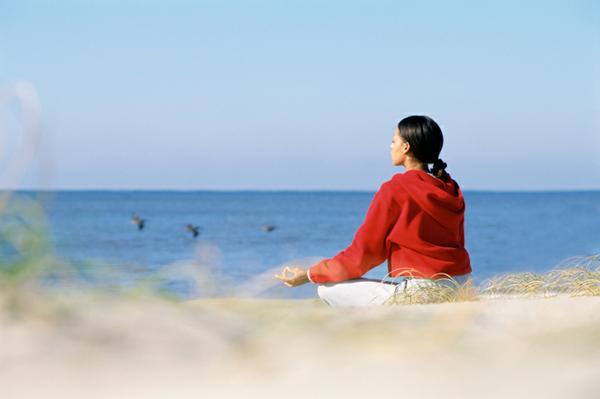 fix or achieve.
Notice sounds around you as they arise and pass. There’s no need to name them or prefer one over another. Then let attention turn inward, as the senses rest back into awareness.
Silently repeat: I rest in my true nature. I am inwardly free. Let the words settle as the breath receives and releases.
Imagine a wide, open sky. Thoughts, sensations, and emotions move through like clouds, birds, and weather. The sky allows them without resisting or becoming them.
Rest for a few breaths as spacious, quiet, awake awareness. When it feels right, return to the present moment by deepening your breath, stretching, and opening your eyes.
A Full Yoga Nidra Practice to Try
Take advantage of this 45-minute yoga nidra practice dedicated to freedom, yoga-style. You’ll be guided through a practice that explores inner liberation and the recognition of awareness as already spacious, whole, and always present. It incorporates themes of steady practice (Abhyasa), non-attachment (Varagya), the drawing inward of senses (Pratyahara), and the freedom of consciousness from mistaken identity (Kavalia).
You’re guided through body relaxation, breath awareness, and reflections on opposites such as heaviness and lightness, holding and letting go. You’ll be invited to repeat a personal resolve (sankalpa), observe thoughts and emotions as passing experiences, and gradually return to full awareness through gentle movement before opening your eyes.
Closing Reflection
Freedom is not always loud. Sometimes it arrives as a softened jaw, a slower breath, a moment of not believing every thought, or a quiet return to the heart.
This month, consider taking a few minutes to pause and ask: What am I ready to release? What remains when I stop grasping? Where can I practice returning to the open sky of awareness?
May your practice reveal the freedom that does not have to be earned, only remembered.
For More
- Attend weekly online classes with Julie & friends
- Listen to recordings
- Read Yoga Nidra Meditations and Yoga Nidra for Complete Relaxation & Stress Relief
- Enjoy Yoga Nidra on Demand … or purchase a download for keeps


